From Zaffe to Zalghouta: Everything You Need to Know
Lebanese weddings are renowned worldwide as some of the most spectacular, joyous, and extravagant celebrations imaginable. These aren’t just weddings – they’re cultural experiences that blend ancient traditions with modern luxury, bringing together families, communities, and generations in an unforgettable display of love, music, dancing, and hospitality.
If you’re planning a Lebanese wedding, attending one for the first time, or simply curious about these magnificent celebrations, you’re in for a treat. Lebanese wedding traditions are rich with symbolism, meaning, and pure joy. From the thundering drums of the Zaffe procession to the triumphant cries of the Zalghouta, from the dramatic sword cake cutting to the energetic Dabke line dance, every element tells a story of cultural pride, family unity, and timeless love.
In this comprehensive guide, we’ll walk you through every major Lebanese wedding tradition, explaining the history, cultural significance, and modern adaptations of each custom. Whether you’re honoring your Lebanese heritage or incorporating these beautiful traditions into a multicultural celebration, understanding the meaning behind each ritual will help you create a wedding that’s both authentic and deeply personal.
🥁The Zaffe: Lebanon’s Legendary Grand Entrance
If there’s one tradition that defines a Lebanese wedding, it’s the Zaffe. This isn’t just an entrance – it’s a spectacular procession, a celebration in motion, and the moment that sets the tone for the entire wedding festivities.
What Is the Zaffe?
The Zaffe (also spelled Zaffeh or Zaffé) is a traditional Middle Eastern wedding procession dating back to the 14th century. Originally used to escort important figures at social and political events, the Zaffe has become most famously associated with weddings, where it creates an atmosphere of joy, excitement, and communal celebration unlike anything else.
The word “Zaffe” comes from the Arabic word meaning “to parade” or “to escort,” and that’s exactly what it is – a joyous escort of the bride and groom from their respective family homes to the wedding venue, and later, their grand entrance into the reception.
What Makes a Zaffe Spectacular:
- Professional drummers creating thunderous rhythms that can be heard blocks away
- Traditional dancers performing choreographed moves with incredible energy
- Musicians playing traditional instruments like the zamoor (flute), horns, and bagpipes
- Sometimes sword dancers or fire performers adding dramatic flair
- Car horns honking in rhythmic patterns as the procession travels
- Streets closed off as entire neighborhoods participate
- Onlookers throwing rice, flower petals, and candy-coated almonds from balconies and porches
The Cultural Significance
The Zaffe serves multiple purposes in Lebanese culture. It publicly announces the marriage to the entire community, making the union official not just in the eyes of the law and religion, but in the eyes of everyone who witnesses it. The loud drums are believed to ward off evil spirits and negative energy, protecting the couple as they begin their married life.
The energy and enthusiasm of the Zaffe is thought to set the tone for the entire marriage – the louder and more joyous the celebration, the more blessed the union will be. It’s also a demonstration of both families’ joy and pride, showing the community how much they celebrate this union.
Regional Variations
Different regions of Lebanon have their own Zaffe styles. The Baalbek Zaffe, from Lebanon’s Beqaa Valley, is considered one of the most authentic and powerful, featuring skilled troupes with traditional choreography passed down through generations. Coastal regions might incorporate more modern music elements, while mountain villages often maintain the most traditional forms.
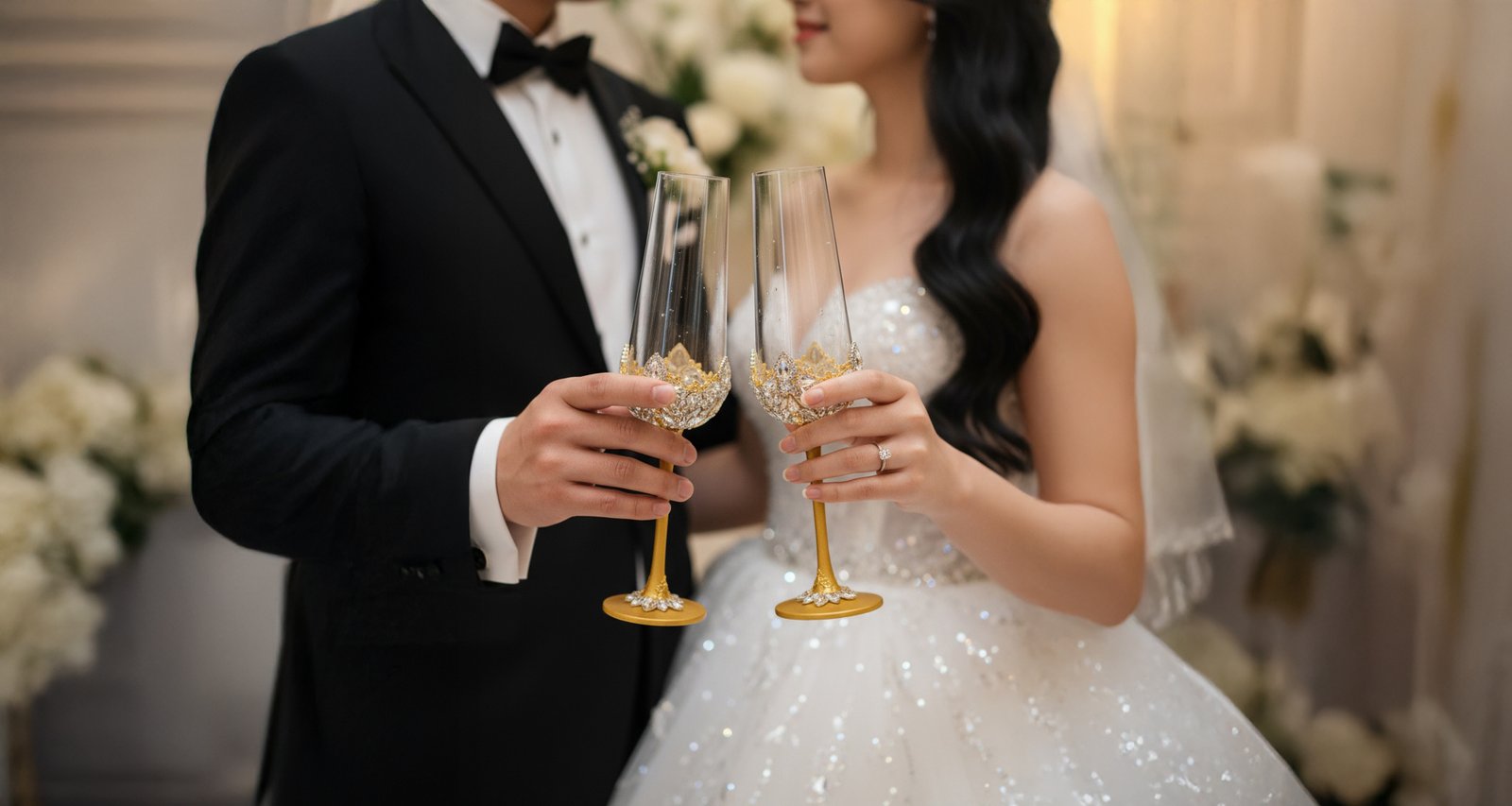
💡 Modern Twist: Many contemporary Lebanese couples now toast immediately after their Zaffe entrance, making this the perfect moment to use beautifully crafted champagne glasses. The first toast as a married couple, performed in front of all your guests with the energy of the Zaffe still pulsing through the air, creates an unforgettable moment. Your champagne glasses should sparkle under the lights, photograph beautifully, and be substantial enough to reflect the grandeur of this moment. >> Champagne flutes as special as the moment <<
Planning Your Zaffe
Most Lebanese couples hire professional Zaffe troupes who specialize in these performances. The best troupes are booked months in advance, especially during peak wedding season (spring and summer). You’ll work with them to choose music, choreography, and the overall energy level you want. Some couples opt for traditional only, while others blend modern pop songs with traditional rhythms.
A Zaffe typically lasts 15-30 minutes, though some can go longer. The procession starts at the bride and groom’s respective homes (where pre-wedding parties have been happening) and travels through the streets to the wedding venue, with the entire community participating in the celebration.
🎉 The Zalghouta: The Ululation of Pure Joy
At a Lebanese wedding, you’ll hear a sound unlike anything else – a high-pitched, trilling cry that sends shivers down your spine and fills the air with celebration. This is the Zalghouta (also spelled Zaghrouta), and it’s one of the most distinctive and emotionally powerful elements of Lebanese wedding traditions.
What Is Zalghouta?
The Zalghouta is a form of ululation – a high-pitched tongue trill produced using the throat and tongue. It requires considerable skill, as not everyone can hit the high notes necessary. The sound is loud, piercing, and unmistakably joyful, often compared to a battle cry or warrior’s call, but filled with love and celebration.
What makes the Lebanese Zalghouta unique from ululations in other Arab and African cultures is that it typically includes verses or poetry before the loud cry. These verses compliment the bride and groom, highlight their beauty, praise their families, and wish them blessings. The verses are often improvised, tailored specifically to the couple and the moment, requiring both wit and creativity.
🎵 How It Sounds: The Zalghouta begins with verses chanted by an older, experienced woman (often an aunt or grandmother): “Eh wiha!” followed by praises and blessings. The other women respond with “Ehhhhhh!” (like “yessssss!”). After several rounds, everyone joins in with the high-pitched ululation: “Lilililililililililili!” accompanied by clapping and dancing.
When Does Zalghouta Happen?
Zalghouta occurs at multiple pivotal moments throughout the wedding:
- When the bride leaves her family home for the last time as an unmarried woman
- During the Zaffe procession as the couple makes their grand entrance
- After the ceremony when the couple is officially married
- During the first dance and other special reception moments
- When the cake is cut (especially if using the traditional sword)
- Throughout the night whenever the energy peaks
The Deep Cultural Meaning
Zalghouta is more than just noise – it’s a declaration of love, support, and blessing. It’s the way Lebanese women express their deepest joy for the couple. The sound transcends politics, religion, and family drama, creating a moment of pure communal happiness.
There’s something magical about standing in a circle while the women in your family and community zalghit around you. It’s a fierce connection that bridges generations – hearing your grandmother do it from across the world via video call is a testament to how powerful and important this tradition remains.
Who Performs Zalghouta:
- Mothers and grandmothers of both families
- Aunts and female relatives from both sides
- Close female friends of the bride and groom
- Sometimes younger women learning the tradition
- Occasionally hired performers who are experts in the art
A Living Tradition
While many Lebanese wedding traditions have evolved or incorporated Western influences, the Zalghouta remains constant – a true and unfiltered nod to heritage. It’s one tradition that’s been passed down unchanged through generations, and it’s considered essential to a proper Lebanese celebration.
Even Lebanese diaspora communities around the world maintain this tradition. Second and third-generation Lebanese in America, Australia, Brazil, and Europe still practice Zalghouta at their weddings, keeping this ancient custom alive and vibrant.
💃 The Dabke: The Dance That Unites Everyone
If you’ve been to a Lebanese wedding, you know: no celebration is complete without the Dabke. This isn’t just a dance – it’s the heartbeat of the party, the moment when all generations come together, and the tradition that creates the most joyful memories of the entire night.
What Is Dabke?
Dabke is a traditional Levantine folk dance performed in a line or circle, with participants holding hands or linking arms. The word “dabke” comes from the Arabic word “dabaka,” meaning “stamping of the feet.” And that’s exactly what happens – synchronized stomping, jumping, and rhythmic movement to traditional music that gets everyone’s blood pumping.
Dabke is popular throughout the Levant region, including Lebanon, Syria, Palestine, and Jordan, with each area having its own regional variations and styles. At Lebanese weddings, it’s performed multiple times throughout the night, with each round becoming more energetic and participatory.
The Cultural and Spiritual Significance:
- Unity and Community: The unbroken line of dancers represents family bonds and community support
- Warding Off Evil: Originally performed to chase away evil spirits through stomping and noise
- Blessing the Couple: The longer the Dabke line, the more blessed and supported the couple
- Generational Connection: When grandparents dance alongside grandchildren, it represents continuity
- Joy and Celebration: The energetic movements embody pure, uninhibited happiness
How Dabke Works
Dabke forms a line from right to left, with a leader (called the “lawweeh”) heading the line. The leader is typically the most skilled dancer, performing impressive moves, kicks, jumps, and sometimes acrobatic stunts while guiding the rest of the line.
The dancers hold hands or link arms, creating a human chain. As the music plays, everyone follows the basic step pattern: right foot crosses over left, step to the side, stomp, repeat. As dancers get more comfortable, they add kicks, jumps, and more complex movements.
The leader alternates between facing the audience and facing the other dancers, calling out moves and setting the rhythm. When the leader breaks free to perform solo moves, everyone cheers and claps, then the leader rejoins the line and continues.
Everyone Participates
What makes Dabke special at Lebanese weddings is the inclusivity. When the music starts, everyone – and we mean everyone – gets up to dance:
- Elderly grandparents alongside young children
- The bride in her wedding gown
- Uncles who claim they “don’t dance”
- Guests who’ve never done Dabke before
- Professional dancers and absolute beginners side by side
It’s this universal participation that makes Dabke so powerful. For those few minutes, age, status, and skill level don’t matter. Everyone is part of one continuous line, moving together, celebrating together, creating joy together.
🎯 First-Timer’s Tip: Don’t worry if you’ve never done Dabke! When the music starts, just join the line, hold hands with the people next to you, and follow along. Everyone is so focused on the celebration that no one cares if you miss a step. The energy is infectious, and you’ll find yourself caught up in the rhythm before you know it. This is the magic of Dabke – it welcomes everyone.
Dabke Music and Variations
Traditional Dabke music features drums, flutes (zamoor), and sometimes violins. The rhythm is distinctive and immediately recognizable. Some popular Dabke songs are traditional folk tunes passed down through generations, while others are modern compositions that maintain the traditional rhythm.
At Lebanese weddings, you might see different Dabke styles:
- Al-Shamaliyya: The most common and recognizable form, perfect for mixed groups
- Al-Sha’rawiyya: Characterized by stronger stomps and more forceful movements
- Al-Karaadiyya: Features slower, more graceful movements in an open circle
Professional Dabke Troupes
Many Lebanese weddings hire professional Dabke troupes in addition to the spontaneous Dabke dancing by guests. These professionals perform choreographed routines with impressive acrobatics, perfect synchronization, and high-energy performances that get everyone pumped up. They often perform multiple times throughout the night and encourage guests to join in.
The professionals also serve as leaders for the guest Dabke lines, ensuring the dance continues smoothly and teaching newcomers the steps as they go.
🎂 The Sword Cake Cutting: Drama and Symbolism
Perhaps no Lebanese wedding tradition is more dramatic, more photogenic, or more distinctly Lebanese than cutting the wedding cake with a ceremonial sword. It’s a moment that never fails to wow guests and create stunning photographs.
The Tradition Explained
In Lebanese weddings, the bride and groom together grasp a large ceremonial sword and slice through their towering wedding cake. Lebanese wedding cakes are famously extravagant, often reaching 7, 9, or even more layers (tiers), making the task of cutting through them quite challenging – which is exactly the point.
The Symbolism of the Sword:
- Strength and Unity: Both partners must work together to wield the sword
- Overcoming Obstacles: Successfully cutting through the massive cake symbolizes facing life’s challenges as a team
- Protection: The sword represents the couple’s commitment to protect and defend their union
- Power: The dramatic gesture demonstrates the couple’s strength and confidence
- Heritage: Connects the couple to ancient warrior and royal traditions
The Spectacle
The cake cutting ceremony is pure theater. It typically unfolds like this:
- The Build-Up: Guests gather around the towering cake, cameras ready
- The Fireworks: Often, fireworks light up the venue just before the cutting
- The Sword Presentation: The ceremonial sword is brought out (often a family heirloom)
- The Grip: Both bride and groom place their hands on the sword handle, one on top of the other
- The Cut: Together, they thrust the sword through the cake layers
- The Celebration: Guests cheer, ululate (Zalghouta!), applaud, and shower the couple with well-wishes
- The Kiss: The tradition ends with the couple exchanging a kiss, symbolizing the sealing of their partnership
The Cake Itself
Lebanese wedding cakes deserve their own spotlight. These aren’t your average wedding cakes – they’re architectural marvels of sugar and flour. Made with wheat flour (symbolizing fertility), decorated extravagantly with flowers, fondant, and intricate designs, these cakes can weigh hundreds of pounds.
The sweetness of the cake represents the sweet life ahead for the couple. The multiple tiers represent abundance and prosperity. And the sheer size? That’s Lebanese extravagance and hospitality on full display.
🔥 Fun Fact: The fireworks that accompany the cake cutting aren’t just for show. Lebanese culture loves making noise and creating spectacle at celebrations. The fireworks serve multiple purposes: they ward off evil spirits (like the Zaffe drums), they create a magical atmosphere, and they ensure this moment is etched in everyone’s memory forever.
Family Heirloom Swords
Many Lebanese families have ceremonial swords that have been passed down through generations, used at wedding after wedding. These heirlooms carry the blessings of all the marriages that came before, connecting the newlyweds to their ancestors and family history.
If your family doesn’t have a ceremonial sword, many venues have them available, or they can be rented from wedding suppliers. Some couples choose to purchase their own sword, which then becomes their family heirloom for future generations.
Modern Alternatives
While the sword tradition remains beloved and dominant, some modern Lebanese couples are incorporating elegant cake cutting sets into their celebrations. These handcrafted, crystal-embellished servers offer precision and refinement. Some couples use both – the sword for the dramatic first cut and photos, then elegant servers for actually portioning and serving the cake to guests.
💡 Your Wedding Moment: Whether you choose the traditional sword, an elegant crystal-embellished cake server, or both, what matters is the symbolism – hands joined, working together, beginning your marriage with strength and unity. The pieces you choose for this moment should be worthy of the memory, beautiful enough to photograph well, and special enough to keep and display in your home as a daily reminder of your wedding vows.
🎊 Pre-Wedding Celebrations: The Party Before the Party
Lebanese wedding celebrations don’t begin on the wedding day – they start long before, with multiple pre-wedding events that are celebrations in their own right.
The Laylieh (Pre-Wedding Parties)
On the day of the wedding, about 3 hours before the ceremony, both the bride and groom’s families host separate pre-wedding celebrations at their respective homes. These Laylieh parties feature:
What Happens at Laylieh:
- Close family and friends gather (though “close” can mean 50-100 people!)
- Professional photographers capture getting-ready moments
- Abundant food: wedding chocolates, cake pops, cookies, cupcakes, pistachios, nuts
- Drinks flowing: cocktails, juice, champagne
- Flowers everywhere – delivered by friends and family as gifts
- Music, laughter, and celebration
- The bride and groom each receive well-wishes separately
The Gift Exchange
Just before leaving for the church, the groom’s parents visit the bride’s home and present her with a gift – traditionally gold jewelry or diamonds for her to wear on her wedding day. This gift symbolizes the bride’s value to her new family and represents lasting prosperity.
At the same time, both families exchange blessings and embrace, officially uniting the two families before the ceremony even begins.
Modern Bridal Shower (Laylieh)
In addition to traditional celebrations, modern Lebanese brides often have Western-style bridal showers. These have become increasingly popular and feature games, gifts for the bride’s new home, elegant décor, and celebration with female friends and relatives.
🍽️ Food and Hospitality: The Lebanese Way
If there’s one thing Lebanese culture is famous for besides its weddings, it’s hospitality – and at a Lebanese wedding, hospitality reaches its absolute pinnacle.
The Abundance Principle
Lebanese weddings operate on a simple principle: there must be MORE than enough of everything. Running out of food or drink is considered shameful and brings bad luck to the marriage. This belief results in the legendary abundance that characterizes every Lebanese wedding.
🍴 What This Means:
- Tables overflowing with mezze (appetizers): hummus, baba ghanoush, tabbouleh, kibbeh, fattoush
- Multiple main courses: grilled meats, seafood, rice dishes, lamb, chicken
- Endless drinks: champagne, arak, wine, cocktails, fresh juices
- Elaborate dessert tables: baklava, maamoul, kunafa, and countless other sweets
- The wedding cake (which is enormous)
- Continuous service throughout the night – plates refilled constantly
Cultural Importance of Food
In Lebanese tradition, how you treat your guests reflects your family’s honor and generosity. A wedding feast isn’t about showing off wealth – it’s about sharing your joy and blessing with everyone who celebrates with you. The abundance demonstrates your family’s gratitude to the guests for witnessing and blessing the union.
Presentation Matters
Lebanese culture places equal importance on how food is served. This is why many couples invest in elegant serving pieces, beautiful glassware, and handcrafted table settings. Every detail contributes to the overall impression of care, thoughtfulness, and luxury.
From the champagne glasses used for toasts to the cake servers used for the ceremonial cutting, each piece should honor the tradition of Lebanese hospitality while adding elegance to the presentation.
The Sweet Tradition
Sugared almonds (Jordan almonds or dragées) are given to every guest as favors. These aren’t just treats—they carry deep symbolism:
The Meaning Behind Five Almonds:
- Professional drummers creating thunderous rhythms that can be heard blocks away
- Traditional dancers performing choreographed moves with incredible energy
- Musicians playing traditional instruments like the zamoor (flute), horns, and bagpipes
- Sometimes sword dancers or fire performers adding dramatic flair
- Car horns honking in rhythmic patterns as the procession travels
- Streets closed off as entire neighborhoods participate
- Onlookers throwing rice, flower petals, and candy-coated almonds from balconies and porches
The bitter almond covered in sweet coating represents life’s challenges sweetened by love. Guests should take an odd number (never even) for good luck, and the almonds are often beautifully packaged in tulle, decorative boxes, or elegant containers that match the wedding theme.
💒 Religious Ceremony Traditions
The religious ceremony varies depending on whether the couple is Christian, Muslim, or Druze, but certain elements remain consistent across Lebanese wedding ceremonies.
The Crowning Ceremony
One of the most beautiful moments in Lebanese Christian weddings (Orthodox and Maronite) is the crowning ceremony:
The Crowning Symbolism:
- The crowns (Iklil in Arabic) crown the couple as king and queen of their new kingdom – their marriage
- They represent the glory and honor God bestows upon the couple
- The crowns are joined by a ribbon, symbolizing the inseparable bond of marriage
- In Orthodox tradition, crowns are exchanged three times over the couple’s heads
- The couple walks around the altar three times while crowned, taking their first steps as husband and wife
These crowns often become precious family heirlooms, displayed in the home as a reminder of the sacred vows and passed down through generations.
The Common Cup
During the ceremony, the bride and groom drink from a common cup of wine, symbolizing the sharing of life’s joys and sorrows. This moment represents their commitment to face everything together, sharing both sweet and bitter moments as one.
🌸 Colors, Flowers, and Symbols
Traditional Color Meanings
Colors play an important symbolic role in Lebanese weddings:
- Gold: Prosperity, wealth, divine blessing, and lasting value – seen in jewelry, accents, and glassware
- White: Purity, new beginnings, celebration – the bride’s dress and overall theme
- Red: Passion, love, vitality – incorporated in flowers and decorative details
- Blue: Protection from evil eye, peace, fidelity – subtle accents for spiritual protection
- Green: Growth, harmony, fertility – significant across religious communities
Symbolic Flowers
Orange blossoms: Traditional in Lebanese bridal bouquets, symbolizing purity, eternal love, and fertility. The scent calms nerves and brings peace.
Roses: Red for romance, white for purity, pink for grace. Often combined with other flowers for layered meaning.
Jasmine: Beauty, elegance, and good luck. Popular in summer weddings for its intoxicating fragrance.
Lilies: Purity, commitment, and rebirth. White lilies are especially popular for church ceremonies.
🎭 Modern Lebanese Weddings: Tradition Meets Contemporary Style
Today’s Lebanese brides and grooms face an exciting challenge: honoring centuries of tradition while creating a celebration that feels personal, contemporary, and uniquely theirs.
What’s Staying
- The Zaffe entrance – absolutely non-negotiable for most couples
- Dabke dancing as the highlight of the reception
- The cake cutting ceremony (whether sword or elegant alternative)
- Zalghouta at key moments throughout the celebration
- Generous hospitality and abundant food
- Family involvement in every aspect of planning
- Multi-day celebrations with pre-wedding events
What’s Evolving
- Destination weddings: Lebanese traditions traveling worldwide to exotic locations
- Personalized details: Custom-designed elements over generic rentals
- Smaller guest lists: Some couples opting for more intimate celebrations (though still large by Western standards!)
- Sustainable choices: Handcrafted, artisanal pieces over mass-produced items
- Mixed traditions: Blending customs when couples come from different backgrounds
- Modern music: Contemporary songs mixed with traditional rhythms
The Rise of Handcrafted Wedding Details
There’s a growing movement among Lebanese couples to choose handcrafted, artisanal pieces for their weddings. This trend bridges tradition and modernity beautifully:
Why Handcrafted Matters:
- Each piece carries the maker’s blessing and good intentions
- Supports local Lebanese artisans and preserves traditional crafts
- Creates unique, one-of-a-kind wedding moments
- Becomes a true heirloom to pass down through generations
- Reflects Lebanese appreciation for quality and beauty
- Connects to Lebanon’s ancient tradition of master craftsmanship
From ancient Phoenician glasswork to modern design, Lebanese culture has always valued handmade excellence. Choosing handcrafted wedding pieces – champagne glasses with crystals placed one by one, hand-embellished cake servers, custom-designed wedding collections – connects couples to this rich heritage while creating something entirely new.
📝 Planning Your Lebanese Wedding: Practical Timeline
6-12 Months Before
- Consult with both families about must-have traditions
- Book church or ceremony venue (these fill up quickly!)
- Research and book Zaffe performers and Dabke leaders
- Begin designing custom items (glassware, cake servers) to allow time for handcrafting
- Choose your cake designer (remember: it needs to be TALL!)
- Book photographer and videographer who understand Lebanese traditions
3-6 Months Before
- Finalize ceremony traditions with your religious officiant
- Order or commission wedding crowns (if not provided by church)
- Confirm all personalized items are in production
- Plan your Laylieh (pre-wedding parties)
- Choose music for Zaffe, Dabke, and reception
- Finalize catering menu (abundance is key!)
1-2 Months Before
- Finalize guest count (Lebanese weddings tend to grow!)
- Confirm timing with all vendors (weddings run late – prepare them!)
- Review all ceremonial items and traditions with wedding party
- Ensure you have something blue for protection from evil eye
- Plan henna party details
- Arrange for ceremonial sword (family heirloom or rental)
Week of Wedding
- Final check of all ceremonial items (crowns, sword, glassware, cake server)
- Brief wedding party on their roles in traditions
- Confirm Zaffe and Dabke timing and coordination
- Prepare mentally for a long, joyous celebration (until 2-3 AM!)
- Prepare for Laylieh on wedding day
❓ Frequently Asked Questions
How long do Lebanese weddings last?
Lebanese weddings are famous for going well past midnight, typically lasting until 2-3 AM or even later. The couple must be the last to leave, so prepare for a marathon celebration! The energy rarely dips because of the multiple traditions, dancing, and constant activity throughout the night.
What should I wear as a guest to a Lebanese wedding?
Formal attire is expected. Men typically wear suits or tuxedos. Women wear elegant cocktail dresses or evening gowns. Lebanese weddings are glamorous affairs, so don’t worry about being overdressed – it’s nearly impossible! Avoid white (that’s for the bride) and consider adding some sparkle or color.
How many guests attend a typical Lebanese wedding?
Lebanese weddings typically host 200-400 guests, though some can exceed 500-600. Extended family, friends, neighbors, business associates, and community members are all invited. The guest list often grows significantly from initial plans because Lebanese hospitality means not wanting to exclude anyone.
Do I need to bring a gift?
Yes, gifts are expected. Cash is the most traditional and practical gift – brought in an envelope or given during the money dance. The amount varies based on your relationship to the couple and your means, but should at least cover your plate (typically $100-200+ per person). Close family members often give substantially more.
Can non-Lebanese people attend Lebanese weddings?
Absolutely! Lebanese weddings are incredibly welcoming to people from all backgrounds. In fact, Lebanese hosts take pride in sharing their culture with others. Don’t hesitate to ask questions, participate in the dancing, and enjoy the celebration. Everyone will be happy to teach you the Dabke!
Is alcohol served at Lebanese weddings?
It depends on the family’s religious background and personal preferences. Many Christian Lebanese weddings serve alcohol freely (champagne, arak, wine, cocktails). Some Muslim families serve alcohol, while others don’t. When in doubt, follow the couple’s lead.
What’s the most important tradition I shouldn’t miss?
The Zaffe entrance and the Dabke dancing are the two absolute highlights. Make sure you’re present (and camera-ready!) for the Zaffe, and definitely join in the Dabke line when it starts. These are the moments you’ll remember forever.
💎 Creating Your Own Family Traditions
While honoring established Lebanese wedding traditions, today’s couples are also creating new customs that will be passed down to future generations.
The Heirloom Approach
Many couples are now investing in special pieces specifically to become family heirlooms:
- Personalized champagne glasses for the wedding toast, used every anniversary
- Cake cutting sets displayed in the home as daily reminders of wedding vows
- Wedding memory boxes with meaningful items from the celebration
- Family recipe books featuring dishes served at the wedding
- Anniversary photo traditions recreating specific wedding moments each year
The Power of Personalization
Engraving your wedding date, names, or a meaningful phrase onto your wedding glassware or cake cutting set transforms these items from beautiful accessories into family treasures. Fifty years from now, your grandchildren will hold these pieces and feel connected to your love story. They’ll use them at their own weddings, creating continuity across generations.
💫 Investment in Beauty:
The details you invest in are the ones you’ll remember most. Years from now, you’ll remember the weight of your champagne glass during your first toast, the way crystals caught the light during the Zaffe, the feel of the cake server in your joined hands. These aren’t just accessories – they’re part of your story. In Lebanese culture, where family, tradition, and hospitality are everything, having beautiful, meaningful pieces that honor these values makes all the difference.
🌟 Final Thoughts: Your Wedding, Your Way
Lebanese wedding traditions are beautiful threads connecting you to generations of love stories that came before yours. Whether you choose to honor every tradition or select a few meaningful customs, what matters most is that your wedding reflects your love, your values, and your vision for your future together.
The beauty of Lebanese culture is its adaptability – traditions evolve while maintaining their essence. Today’s Lebanese couples are proving you can honor your heritage while creating something entirely your own.
From the thundering drums of the Zaffe to the joyful cries of Zalghouta, from the energetic Dabke line to the dramatic sword cake cutting, each tradition offers an opportunity to create meaning, beauty, and unforgettable memories.
And when you invest in handcrafted, personalized pieces for these special moments – champagne glasses that sparkle with hand-placed crystals, cake cutting sets that feel substantial and special in your hands – you’re not just following tradition. You’re creating new ones. You’re starting your own family legacy.
The wedding crowns placed on your head crown you as king and queen of your new kingdom. The champagne glasses you raise during your first toast hold not just champagne, but the promise of your future. These aren’t just symbolic gestures – they’re the foundation moments of your marriage.
Because the most important Lebanese wedding tradition of all? Creating a celebration so filled with love, joy, beauty, and meaning that it sets the tone for your entire marriage. A celebration that honors where you come from while embracing where you’re going. A celebration your grandchildren will hear stories about and want to recreate for their own weddings.
And that’s a tradition worth investing in.
Ready to Honor Your Lebanese Heritage with Elegance?
Explore our collection of handcrafted wedding champagne glasses and cake cutting sets – each piece designed to honor Lebanese traditions while celebrating your unique love story. Every crystal is placed by hand, every detail is considered, every piece is made to become a family heirloom.
Visit: www.eclatdamourlb.com/shop
Discover why Lebanese brides and grooms across the region are choosing handcrafted elegance for their special day.
Because your love story deserves pieces as unique and beautiful as the traditions you’re honoring.


Leave a Reply